


Studying the impacts of Solar Radiation Modification
Date updated:
EDF is part of a growing number of scientists, nonprofits and companies studying Solar Radiation Modification (SRM), a new technology that could temporarily lower global temperatures. EDF’s policy-relevant research program focuses on the potential impacts of stratospheric aerosol injection (SAI). We aim to both advance the understanding of SRM’s impacts and also foster public trust by working collaboratively in an open and transparent manner.
Our work in SRM dates back to 2010, when we began engaging with other scientists around the world on the issues of inclusion and governance through SRMGI, now known as DEGREES.
What is Solar Radiation Modification?
Solar radiation modification (SRM) is a deliberate intervention into the climate system to temporarily reduce the earth’s temperature. Also referred to as solar geoengineering, this idea involves reflecting incoming sunlight back into space. Scientists are exploring a number of methods, including injecting aerosols into the stratosphere and increasing the brightness of marine clouds.
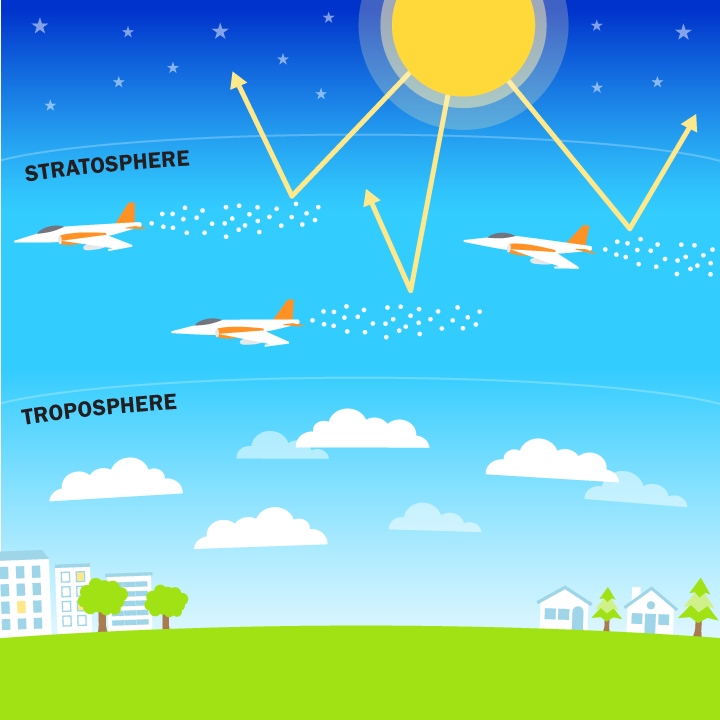
Research suggests that these methods could potentially lower global temperatures relatively quickly. However, those impacts would be temporary and would not address the root causes of climate change or other problems like ocean acidification.
That’s why it’s critical that we remain focused on driving the transition to clean energy and reducing climate pollution. However, interest in this technology is growing, and it has the potential to be a high-impact tool to temporarily reduce climate harms. Therefore, we need to better understand the impacts and possible unintended consequences SRM may bring.
EDF’s SRM program
EDF is beginning policy-relevant research on SRM and its impacts, and we’re focusing on stratospheric aerosol injection (SAI) as a priority. Our first round of grantees is focusing on the impacts of SAI on ecosystems, agriculture and the availability of water, using historical parallels like volcanic eruptions and wildfires.
We have a history of collaborating with academics, businesses, nonprofits, NGOs and governments to expand the scientific understanding of some of the world’s biggest environmental challenges. We’re bringing that experience to this field, providing a transparent research program to serve the public good. Our program will offer critical insights and foster partnerships that help turn a polarized debate into a foundation for informed and equitable decision-making.
Our key principles
Research transparency is vital for maintaining scientific and public trust. Our SRM research program will exceed the transparency standards typically required for scientific projects. This includes publishing our grantees, their intended projects and the funding sources. We will publish the results, including data collected and/or generated, in a space accessible to everyone. That includes our website, webinars, blogs and other public media.
-
Our donors include:
- Crankstart
- Outlier Projects
- Navigation Fund
- LAD Climate Fund
- The Bernard and Anne Spitzer Charitable Trust
- Troper Wojcicki Foundation
Learn more about Solar Radiation Modification
- Initiative
EDF grantees study past data to understand potential SRM impacts
- Explainer
Our position on geoengineering
- Blog post
Why it’s time to explore the potential impacts of Solar Radiation Modification
- Blog post
Three signs solar radiation modification research is moving in the right direction
- Report
Workshop Report Proceedings from a Workshop on Operationalizing Research Governance for Solar Radiation Modification (SRM)
- Report
Workshop Report: Identifying and leveraging empirical datasets for Solar Radiation Modification Impact Research
Our experts
-

Associate Chief Scientist
-

Senior Scientist
-

Social and Behavioral Scientist
-

Lead Senior Behavioral Social Scientist
-

Associate Vice President, Innovation and Technology Policy
MEDIA CONTACT
Anne Marie Borrego
(202) 572-3508 (office)
Your gift can help reduce dangerous pollution
Give now to defend our planet:
Donate now and triple your impact to build a cleaner, safer, more affordable future in 2027 and beyond.
Give now to defend our planet: