


EDF grantees study past data to understand potential SRM impacts
EDF’s research program on Solar Radiation Modification (SRM) focuses on the potential impacts of stratospheric aerosol injection (SAI), with the goal to catalyze research in policy-relevant areas that have been historically understudied.
Impacts research around SAI has mainly focused on changes to temperature. Research on the impacts on ecosystems, agriculture, or water is limited.
Historical events, like large volcanic eruptions or wildfires, offer similarities to potential SAI scenarios and may offer insight into impacts on potential SAI deployment. Such events are also referred to as “analogs” or “proxies” for SAI.
Our first round of grantees is focused on exploring the potential these events have for understanding impacts of SAI on ecosystems, agriculture and the availability of water.
The nine, one-year funded projects span topics from agricultural crop yields to rainfall to freshwater ecosystems. The research teams will use datasets from either satellite or ground networks, or both. These studies will help to also improve global modeling of impacts.
We aim to both advance the understanding of SAI’s impacts and foster public trust by working collaboratively in an open and transparent manner by sharing information about our research and grantees.
Utilizing wildfire proxies to evaluate SAI influence on water availability
The 2019 – 2020 Australian wildfire was so large that the smoke reached the stratosphere and changed its aerosol composition, making the event a potential proxy for SAI. This study will contrast satellite observations before and after the wildfire to investigate if smoke changed the amount and duration of precipitation regionally.
Since the Australian wildfire impacted the southern and northern hemispheres differently, this study will also leverage those differences to understand how varied magnitudes of stratospheric change may impact water availability regionally. These results will help to understand which regions of the world are most likely to experience significant regional precipitation and water availability changes and thus may experience greater ecosystem vulnerability to potential SAI deployment.
Principal Investigator: Dr. Isabel McCoy
Institution: Colorado State University
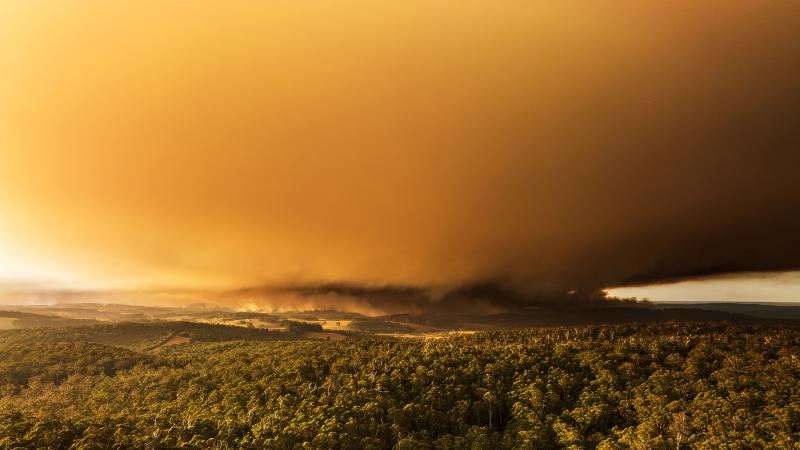
Understanding the impacts of SAI on crop yields using wildfire smoke
When sunlight passes through wildfire smoke, the amount and characteristics (direct vs. diffuse) of that light changes. In a similar way, potential SAI deployment will change the sunlight that reaches the ground. Such changes may influence agricultural crop yields, because plants depend on the affected sunlight wavelengths also called photosynthetically active radiation (PAR) for photosynthesis.
This study will use observations of PAR during past smoke events over the contiguous U.S. along with models to establish a relationship (parameterization) between PAR, atmospheric conditions and the yield of critical crops: rainfed maize, soybean, spring wheat and sorghum. The parameterization will be adapted from wildfire smoke to proposed SAI materials (such as sulfate) to estimate the impact of potential SAI deployment on crop yields. These results will help reduce the uncertainty in impacts to agriculture from changes in sunlight under potential SAI deployment.
Principal Investigator: Dr. Nathaniel D. Mueller
Institution: Colorado State University
Ecosystem productivity and crop yields under SAI: Understanding plant responses to diffuse radiation via ground and satellite observations
Volcanic eruptions emit material that changes the stratosphere and reduces the amount of sunlight and type (wavelength) that reaches the earth’s surface. Volcanic eruptions are an SAI analog, because SAI is expected to similarly alter sunlight. These sunlight changes may ultimately influence an agricultural crop’s gross primary production (GPP), a key indicator of ecosystem’s ability to absorb CO2.
This study will use global land- and satellite-based historical observations to determine how volcanic eruption events influence GPP and crop yield. By linking observed changes in solar radiation to plant productivity responses, the project will generate empirical constraints for land surface models, improving their ability to simulate ecosystem responses to altered sunlight conditions, whether from natural events or potential SAI deployment. This research will advance the understanding of how shifts in sunlight affect ecosystem productivity and crop yields.
Principal Investigator: Dr. Liyin He
Institution: Duke University
Recurring, long-duration wildfires to understand climate and ecosystem impacts of SAI
Wildfire smoke is a complex mixture of microscopic particles (aerosol) that vary in both their chemical makeup and size. But the longer the aerosols stay in the atmosphere, the more they might behave like sulfur, which is the most commonly discussed aerosol for SAI.
This study will investigate the change in sunlight shading from the natural variation of particle chemistry and size seen in large smoke events as an analog to potential SAI deployment strategies. It will leverage historical ground and satellite observations across the continental U.S. to connect these variables to observed changes in ecosystems. The analysis will identify and implement key particle-sunlight physical processes that are missing in large earth system models. These improvements will reduce uncertainties around the impacts of potential SAI deployment , importantly on ecosystems and human health.
Principal Investigator: Dr. Ben Kravitz
Institution: Indiana University
Preventing coral bleaching through SAI: An observation-based model to predict coral bleaching from both heat and light stress to assess impacts of SAI
Coral bleaching is a physiological stress response that results in the loss of essential coral nutrients, and it is increasing in frequency and severity globally. Stratospheric perturbations, including volcanic eruptions and potential SAI deployment, are expected to reduce both sunlight and ocean temperature, and may influence coral bleaching events.
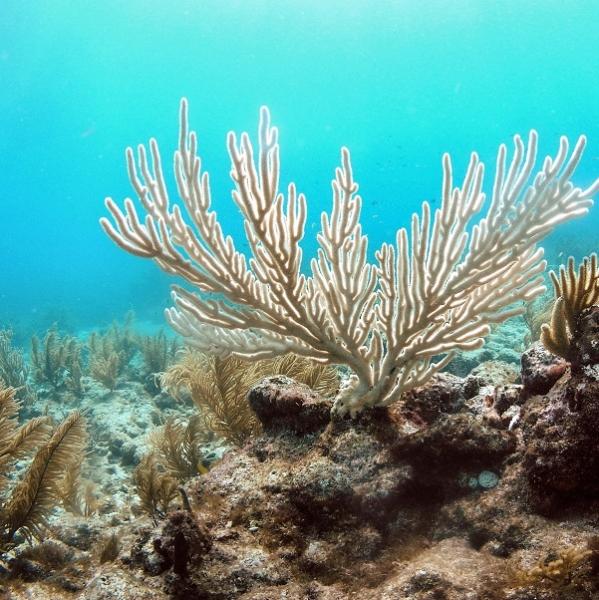
This study will investigate how historically observed changes in ocean temperature and sunlight during volcanic eruption events influence coral bleaching. The analysis will use global ocean and satellite observations to develop and train a predictive bleaching model. The model can then be used to estimate bleaching events under climate change and potential SAI deployment scenarios. These results will improve our understanding of how our currently changing climate, as well as potential SAI deployment, impact marine ecosystems globally.
Principal Investigator: Dr. Cheryl S. Harrison
Institution: Louisiana State University
In the context of extreme events and biotic interactions, how will SAI alter ecological structure and function?
Sunlight and temperature are key physical variables that influence an ecosystem by altering relationships within ecological communities, such as predator-prey relationships. Our planet contains many ecosystems with variety of physical parameters as well as varying likelihoods for experiencing extreme events (e.g. heat waves or droughts).
This study will investigate these extreme changes in current-day ecosystems by identifying climate analogs, which are ecosystems that are similar to those expected from potential SAI deployment scenarios. By comparing the differences between current ecosystems and their SAI analogs the study will develop a better understanding of how ecosystems may change under potential SAI scenarios. The results will then inform laboratory experiments that test the relationship between fish predators and their prey under various temperature and light conditions. The findings will advance our understanding of the influence of potential SAI deployment on global ecosystems.
Principal Investigator: Dr. Phoebe L. Zarnetske
Institution: Michigan State University
Attributing aerosol-induced crop yield changes: Disentangling light partitioning effects from climate cooling using observations and crop models
Aerosols in the atmosphere, such as those from wildfire smoke or volcanic eruptions, scatter sunlight, causing crops to experience more diffuse and less direct light. This shift can either increase or decrease crop growth. Similarly, potential SAI deployment is expected to change the overall amount of light, and increase the amount of diffuse sunlight reaching the surface.
This study uses data from five agricultural sites across the U.S., China and the Philippines, together with ground-based and satellite observations, to determine the relationship between crop yields and the ratio of diffuse to direct light during aerosol-driven shading events, such as overhead shading from smoke. The results will be compared with estimates from process-based crop models to assess their ability to predict crop yields under altered light conditions and to improve model performance. The results will reduce the uncertainty in simulating future agricultural impacts not only from potential SAI scenarios, but also wildfire or volcanic eruption events.
Principal Investigator: Dr. Lili Xia
Institution: Rutgers University
Co-PI: Dr. Michael Diamond
Institution: Florida State University
Co-PI: Dr. Jonas Jägermeyr
Institution: Columbia University
Impacts of stratospheric aerosols on agriculture, ecosystems, energy, climate, health, and economies based on evidence from volcanic eruptions
Large volcanic eruptions, such as El Chichónin in 1982, injected particles (aerosol) high into the stratosphere causing measurable changes in temperature and the amount of sunlight that reaches earth’s surface. Potential SAI deployments aim to mimic these effects. However, changes to many other variables that are critical to human health may also occur.
This study will combine large global datasets of sunlight with datasets of several other observed variables (e.g. economic, energy, etc.) to determine causal relationships using an established statistical technique. The technique previously identified causal relationships between volcanic eruptions and crop yield changes and will be expanded in this study to find additional relationships. The results will help identify any previously unrealized impacts of potential SAI deployment.
Principal Investigator: Dr. Chris Field
Institution: Stanford University
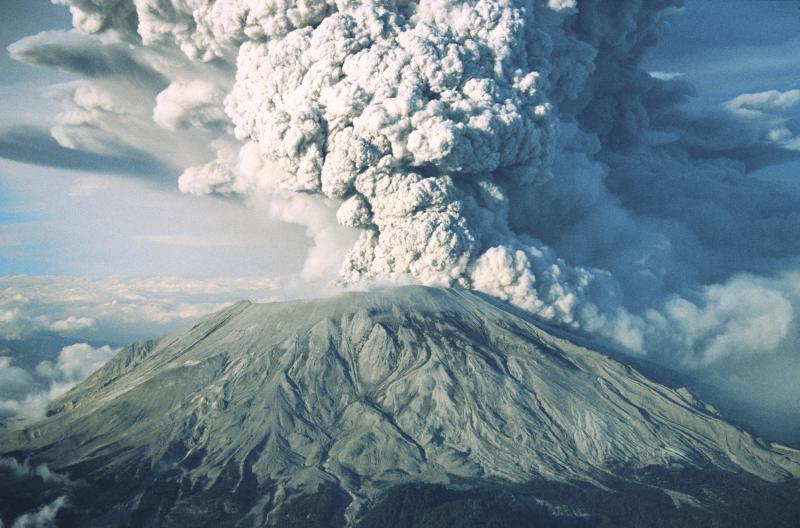
Impacts of SAI analog events on climate, hydrology and agriculture in Malaysia
Temperature generally decreases following large volcanic eruptions, such as Mt. Pinatubo in 1991. In that case, the cooling effect temporarily slowed ice melt and the rate of sea level rise. Potential SAI deployment scenarios are expected to similarly reduce global temperatures and may alter precipitation.
This study will investigate the effects of large volcanic eruptions on hydro-climatic responses, including temperature, precipitation, solar radiation, and streamflow, in Peninsular Malaysia using historical ground and satellite observations. The analysis will then examine how these hydro-climatic changes affect rice production and yield in major rice granary regions of Malaysia. These results will help us better understand how hydro-climatic and agriculture could be affected by future volcanic eruptions and potential SAI deployment scenarios.
Principal Investigator: Assoc. Prof. Dr. Mou Leong Tan
Institution: Universiti Sains Malaysia
Your gift can help reduce dangerous pollution
Give now to defend our planet:
Donate now and triple your impact to build a cleaner, safer, more affordable future in 2027 and beyond.
Give now to defend our planet: