


Wasted energy: What federal methane rollbacks are costing you
Oil and gas operations are wasting billions of dollars-worth of natural gas while energy prices keep rising.
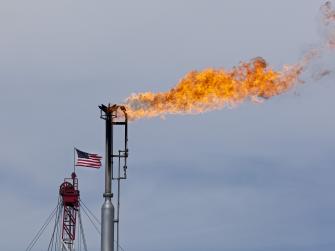
The Trump administration is allowing oil and gas companies to waste natural gas and release methane pollution into our air.
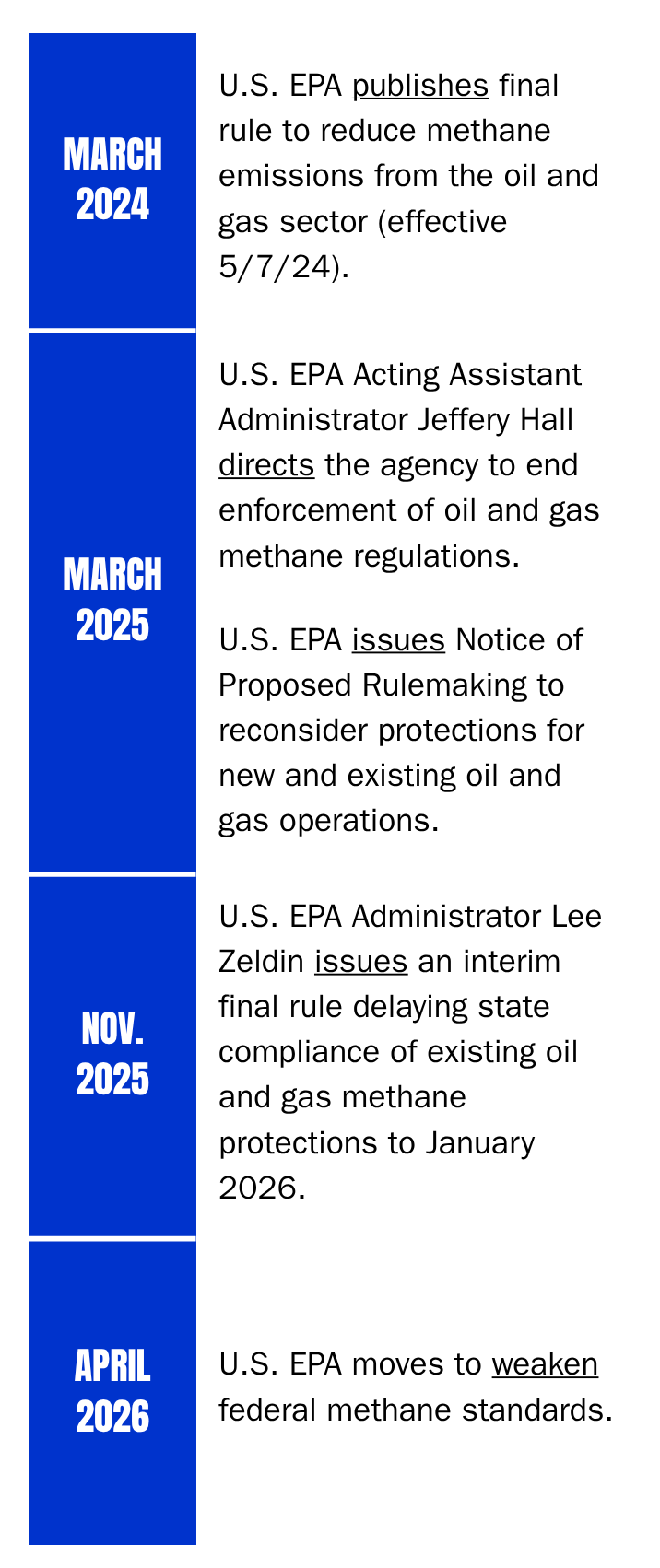
Our Methane Waste Counter shows just how much natural gas has been wasted since the Trump administration announced it would no longer enforce oil and gas methane regulations on March 12, 2025.
$4,217,193,737.11 USD
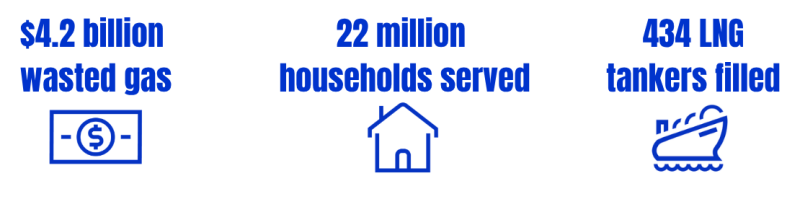
In just the first year since the Environmental Protection Agency stopped enforcing methane regulations, the oil and gas industry leaked, vented or flared $4.2 billion-worth of natural gas that could have met the natural gas needs of nearly 22 million households or filled 434 tankers for natural gas export.
Methane, the primary ingredient of natural gas, is released during oil and gas operations through leaks or intentionally venting or flaring into the atmosphere. That means less natural gas going to market.
EDF calculated just how much natural gas oil and gas companies are wasting using EDF’s EI-ME model, an annual inventory of U.S. oil and gas emissions, and World Bank estimates based on the NASA/NOAA VIIRS satellite data.
The cost of waste
Under the guise of “unleashing domestic energy,” the Trump administration has stopped enforcing rules and is allowing a massive amount of energy waste as a result.
That energy waste is unconscionable when ratepayers are staring down potentially huge increases in natural gas prices driven by worldwide demand for natural gas exports and data centers. The IEA found that global gas demand reached an all-time high in 2024, with no signs of slowing down.
The implications for energy security are significant: too many of our US allies are dependent on high pollution energy sources from unstable countries, fanning the flames of conflict around the globe.
The US wastes about a third as much natural gas as what flows through the Strait of Hormuz each year. Worldwide, nearly three times as much gas is wasted as what flows through the strait.
The US should not have to sacrifice its security or our economy – let alone our climate – for the needless waste of our natural resources and U.S. producers shouldn’t have to deal with an unstable regulatory environment that discourages the adoption of common-sense technological improvements.
Allowing more waste and pollution also makes the U.S. oil and gas industry less competitive. Low-methane intensity gas will be key to meeting the demand from Asia and Europe, where buyers are increasingly seeking cleaner sources of energy.
It doesn’t have to be this way.
Thanks to the abundance of cost-effective and proven commercial technologies that can fix leaks and capture gas, the International Energy Agency estimates “related methane emissions from oil and gas could be reduced by almost 75% at nearly no net cost to the global oil and gas industry.”
The U.S. EPA standards currently under attack by the Trump Administration would help stop the waste from new and existing sources by eliminating routine flaring, requiring regular inspections at all well sites regardless of production level, and phasing out intentionally polluting equipment.
Thankfully, several states have stepped up with forward-thinking regulations to cut methane waste and pollution including California, Colorado, New Mexico and Pennsylvania. Republican-led states such as Ohio, Utah and Wyoming have also taken action to cut methane waste and pollution over the years.
By reining in methane waste, we can bring critical gas to market, create more stable supplies and position the U.S. energy industry to be more competitive.
It’s time to stop the waste.
Rollback Timeline
Our experts
-

Associate Vice President, Energy Transition
-

Senior Attorney, U.S. Legal & Regulatory
-

Senior Director, Regulatory & Legislative Affairs
MEDIA CONTACT
Austin Matheny-Kawesch
(858) 395-5577 (office)
Today only: Donate now and your gift will be matched 300%
Give now to defend our planet:
Your gift can help reduce dangerous pollution around the globe
Give now to defend our planet: