


Investing in innovation is investing in our farmers
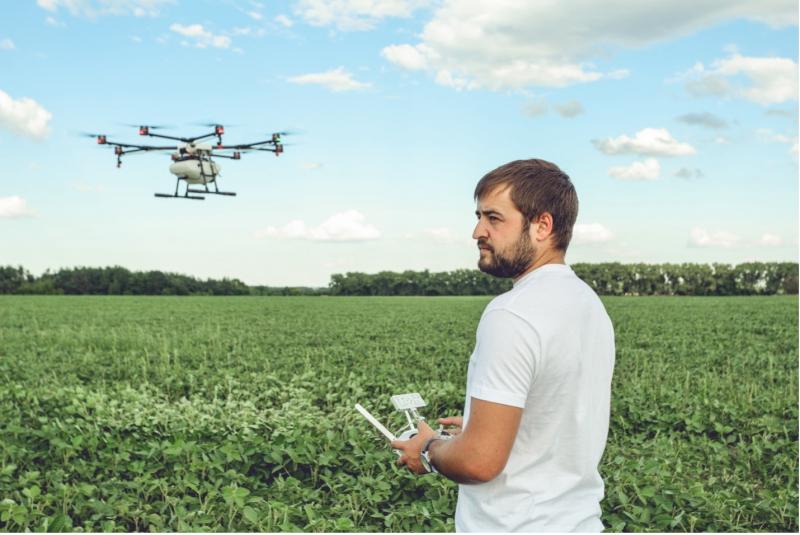
It’s harder than ever for America’s farmers and ranchers to stay productive and competitive amid a changing climate and tighter bottom lines. Agricultural innovation is moving fast, and policymakers have a critical opportunity to align policies with rapidly emerging technologies so U.S. farmers and ranchers can stay globally competitive.
In a new report, Environmental Defense Fund discusses how investing in five key areas — nutrient solutions, precision sensing, data platforms, biotechnology and automation — we can help farmers feed a growing world more efficiently, reduce costs and get their bottom lines back on track, while also protecting our air, water and soil for future generations.
Solutions, investment and policy actions [PDF]
A high-level summary of emerging innovation areas, with clear actions required from both policymakers and industry to create the market forces and enabling environment needed for ag-tech solutions to mature and scale.
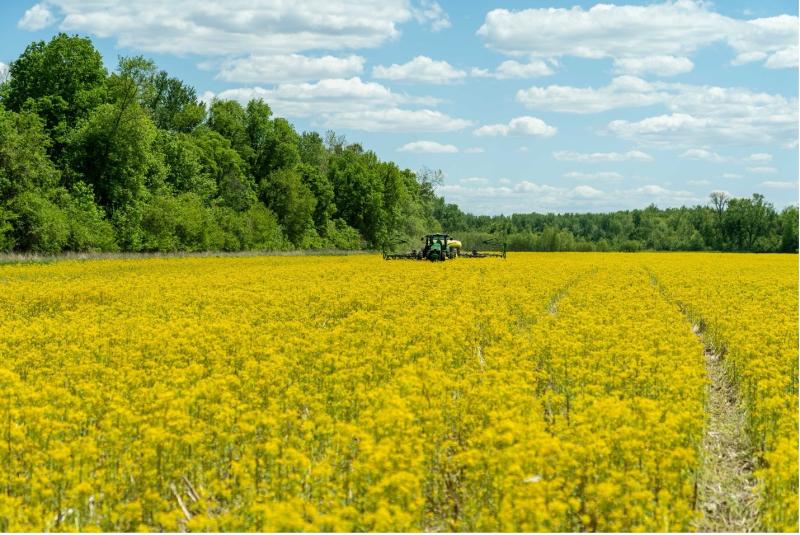
Catalogue of agricultural innovations [PDF]
A detailed reference that profiles each innovation category, including product examples, assessments of market readiness, geographic considerations and potential climate and environmental benefits and tradeoffs.
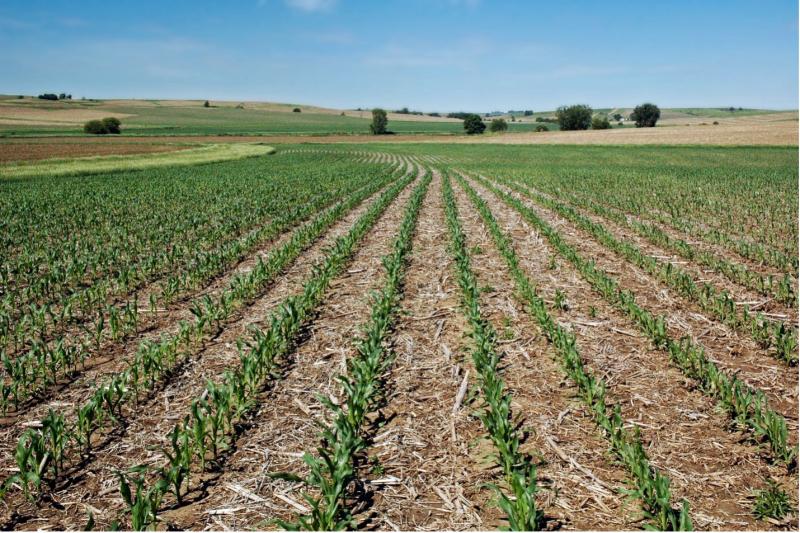
Actions policymakers can take:
- Expand and protect federal funding programs such as Conservation Innovation Grants (CIG), Regional Conservation Partnership Program (RCPP) and Agriculture Advanced Research and Development Authority (AgARDA), to accelerate innovation.
- Fully fund the Agriculture Advanced Research and Development Authority (AgARDA) — established in the 2018 Farm Bill and modeled after the Defense Advanced Research Projects Agency (DARPA) and the Advanced Research Projects Agency–Energy (ARPA-E) — to drive transformative innovation through bipartisan efforts such as the Portal for Appraisal Licensing (PAL) Act, the Feed Enhancement and Economic Development (FEED) Act, and the Enteric Methane Innovation Tools for Lower Emissions and Sustainable Stock (EMIT LESS) Act, helping U.S. farmers and ranchers stay globally competitive.
- Restore and modernize on-the-ground support to help farmers deploy emerging tools, adopt new technologies and implement innovative conservation practices that maximize the benefits of agricultural research and development.
Actions the private sector can take:
- Invest in high-potential innovation areas — from nutrient solutions and precision sensing to robotics and biotech.
- Collaborate across supply chains — food and agriculture companies, ag-tech providers and trade associations should promote supplier education on nutrient management and precision technologies. Strengthen and scale innovative financing models through partnerships with financial institutions and value chain actors to reduce barriers to adoption through cost-share programs, innovative loan structures, blended finance approaches and mechanisms that de-risk investment and give farmers access to the capital that is tailored to meet their needs.
- Ensure scientific integrity by advocating for and aligning on science-based standards and shared metrics for monitoring, reporting and verification (MRV) — building trust across supply chains and markets.
Additional key findings:
The U.S. is well-positioned to lead technology globally in developing scalable, profitable agricultural technologies and doing so is imperative to keeping U.S. farmers globally competitive. EDF’s analysis of nearly 400 innovations shows both market-readiness and strong potential to increase farm productivity across five innovation areas:
- Nutrient and fertilizer solutions: Improved crop nutrient products that reduce emissions, improve nutrient-use efficiency and strengthen farm resilience including renewable ammonia and enhanced-efficiency formulations to microbial and waste-based approaches.
- Smart sensing and precision analytics: Tools that use remote and in-field sensors with AI analytics to optimize inputs, reduce waste and track environmental progress in real time.
- Agronomic data and measurement platforms: Software solutions that combine technical assistance, data platforms and carbon-market support to help farmers adopt innovative conservation practices at scale.
- Biotech and genetic innovation: Advanced biological tools like gene-editing technology and crop-microbiome engineering that enable more resilient, efficient crops and reduce reliance on conventional pesticides and inputs.
- Automation and machinery: Farm machinery that uses AI and/or precision sensors to boost efficiency, cut costs and reduce emissions.
Landscape of Agricultural Innovation reports
-

Solutions, investment and policy actions
Download the reportA high-level summary of emerging innovation areas, with clear actions required from both policymakers and industry to create the market forces and enabling environment needed for ag-tech solutions to mature and scale.
-
Catalogue of agricultural innovations
Download the reportA detailed reference that profiles each innovation category, including product examples, assessments of market readiness, geographic considerations and potential climate and environmental benefits and tradeoffs.
Your gift can help reduce dangerous pollution
Give now to defend our planet:
Donate now and triple your impact to build a cleaner, safer, more affordable future in 2027 and beyond.
Give now to defend our planet: