


Common disinformation about offshore wind power
Offshore wind is an abundant, affordable and clean source of power that will drive economic growth while cutting harmful pollution. However, disinformation about offshore wind energy is on the rise. False claims are being intentionally leveraged to mislead communities and disrupt constructive conversations.
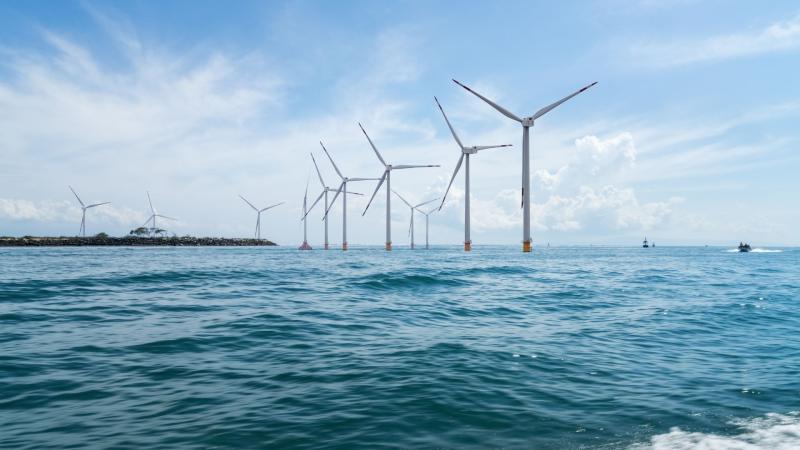
Here are the top 7 facts about offshore wind power to help you respond to the disinformation.
Fact #1: Whales
The National Oceanic and Atmospheric Administration (NOAA) has found no evidence linking offshore wind development and whale deaths.
CONTEXT: A series of whale deaths along the East Coast in early 2023 — including the endangered North Atlantic right whale — led many to falsely attribute the deaths to new offshore wind surveying and development. Many groups that have blamed offshore wind for whale deaths, including “Protect our Coasts NJ” and “Green Oceans,” are funded by fossil fuel interests and climate denial think tanks.1 Scientists believe the North Atlantic right whale deaths can be attributed to whales feeding closer to shore, bringing them into contact with more ships and boats – leading to more deadly ship strikes.2 In fact, nearly half of all documented North Atlantic right whale deaths are due to ship strikes and entanglements in fishing gear.3
Fact #2: Birds
Only a tiny proportion of bird deaths are caused by wind turbines. Far more birds are killed by house cats and by flying into buildings.
CONTEXT: Statistics show that wind turbines cause less than one in 4,000 documented bird deaths from industrial activities in the U.S.; whereas cats and buildings are the top threats.4 Additionally, climate-heating pollution from fossil fuels poses a far bigger threat to birds than wind power. According to the National Audubon Society, two-thirds of all North American bird species are at heightened risk of extinction due to climate change,5 which is why Audubon and almost every major U.S. birding group supports wind energy if it’s developed thoughtfully.
Fact #3: Energy Costs
Research shows that developing offshore wind farms in the U.S. will lower electricity costs and improve public health.
CONTEXT: Research from Resources for the Future, a nonpartisan think tank, shows that offshore wind offers major benefits like lower energy costs and lower air pollution — especially for coastal communities.7 Coastal areas have the highest energy demand and the highest wholesale electricity prices due to this demand. Abundant wind power provides a cheap supply of energy to local communities, reducing costs to consumers.8 Plus, it reduces costs to public health. By replacing gas and coal, offshore wind could prevent 2,000 premature deaths from toxic air pollution.
Fact #4: Reliability
Wind energy is a reliable and proven power source used throughout the country.
CONTEXT: When wind power is integrated with the grid and paired with battery storage, it delivers reliable and affordable electricity. Just look at Iowa — over 50% of its power comes from wind, and it has one of the most reliable grids and some of the lowest electricity bills in the country.9 Offshore wind is just as dependable — and with battery storage, it can provide power even when the wind isn’t blowing. Unlike other energy sources, it can actually be more reliable during winter storms, since those storms typically bring stronger ocean winds.10
Fact #5: Tourism
Most wind turbines are barely visible from shore and will not impact tourism.
CONTEXT: Multiple studies have found that offshore wind will not hurt tourism. For example, in a survey of beachgoers, the majority said they would be unaffected or positively affected by the presence of offshore wind farms.11 Moreover, wind farms do not negatively impact coastal property values.12 Offshore wind farms can bring in substantial revenue for coastal towns and create goodpaying jobs that boost local employment. Additionally, host communities and project developers can establish Community Benefits Agreements, where the developer may contribute to local causes or organizations, invest in workforce development programs and more, depending on what communities prioritize.13
Fact #6: Fisheries
Because of thorough environmental reviews, it’s unlikely that offshore wind will be constructed in areas that harm fisheries.
CONTEXT: 15 In contrast, offshore oil and gas drilling and its pollution pose serious risks. The 2010 Deepwater Horizon disaster forced widespread fishery closures in the Gulf due to seafood contamination.16 And, climate change has already warmed the Gulf of Maine so dramatically — and devastated the herring population so severely — that fishery managers recently proposed slashing the herring catch by 89%.17
How to tackle misinformation when it’s coming from a loved one
Common tactics to look out for
- Astroturfing. Otherwise known as a fake “grassroots” campaign. This is when an outside actor makes it seem like there is an upswelling of local opposition to a clean energy project by bringing in protesters who don’t live in the area, or posting to local NextDoor or Facebook groups. Brown University has uncovered how many prominent anti-wind astroturf groups on the East Coast are connected to think tanks.18
- Ad hominem attacks. This is an attack on a person rather than an issue. Sometimes an ad will attack offshore wind by saying it’s the idea of a hated local politician or an unpopular governor. Because it’s that politician’s idea (and it might not even be their idea), it is therefore a bad idea.
- “Alternate facts.” Some bad actors will present studies or facts that simply aren’t true. They can be falsified, supplied by someone who isn’t an expert or flat-out fabrications. Check the sources of any argument against offshore wind. Did the chart come from a peer-reviewed study in an accredited scientific journal, or did it come from a random blog? Is the data cherry-picked or taken out of context to back an opposing argument?
- Fake experts. Anyone can call themselves an expert, but do they have the proper skills and credentials to back it up? Often a little digging—even as light as checking their LinkedIn profile—may reveal that a clean energy “expert” has lobbied for the oil and gas industry.
REMEMBER: Offshore wind works — for the climate, the economy and communities. To build lasting support, we must challenge false claims, highlight local benefits and center community input in projects.
Footnotes:
1. Brown University. (2023). Against the Wind: A Map of the Anti-Offshore Wind Network in the Eastern United States.
2. NOAA Fisheries. (2024). Frequent Questions—Offshore Wind and Whales.
3. Marine Mammal Commission. Human-Caused Mortality and Injury to the North Atlantic Right Whale.
4. U.S. Fish & Wildlife. Threats to Birds.
5. Impacts from climate change are causing habitat loss. See: National Audubon Society. Survival by Degrees.
6. Resource for the Future. (2025). Offshore Wind Power Examined: Effects, Benefits, and Costs of Offshore Wind Farms Along the US Atlantic and Gulf Coasts.
7. American Clean Power. Offshore wind power facts.
8. U.S. Energy Information Administration (2024). Iowa State Energy Profile.
9. Natural Resources Defense Council. (2024). Wind Is Reliable. It’s Time for New England to Plan for More of It.
10. Parsons and Firestone. (2018). Atlantic Offshore Wind Energy Development: Values and Implications for Recreation and Tourism. U.S. Department of the Interior, Bureau of Ocean Energy Management.
11. Jensen, C.U., Panduro, T.E., et al, (2018). The impact of offshore wind turbine farms on property prices. Energy Policy, 116, 60-59.
12. Office of Energy Efficiency and Renewable Energy. Wind Energy Community Benefits Guide.
13. Electrek. (2022). The first US offshore wind farm has had no negative effect on fish, finds groundbreaking study.
14. NOAA Fisheries. (2020). Deepwater Horizon Oil Spill 2010 Frequently Asked Questions.
15. WBUR. (2025) In New England, climate change is moving fast. The fishing industry is not.
16. Brown University. (2023). Against the Wind: A Map of the Anti-Offshore Wind Network in the Eastern United States.
Your gift can help reduce dangerous pollution
Give now to defend our planet:
Donate now and triple your impact to build a cleaner, safer, more affordable future in 2027 and beyond.
Give now to defend our planet: