


Extreme weather gets a boost from climate change
Scientists are detecting a stronger link between the planet's warming and its changing weather patterns.
Though it can be hard to pinpoint whether climate change intensified a particular weather event, the trajectory is clear — hotter heat waves, drier droughts, bigger storm surges and greater snowfall.
Heat and drought
The dangerous effects of heat waves, including death, occur as a result of both temperature and humidity — especially if those conditions persist for more than two days.
With temperature records being smashed month after month, year after year, it's likely that human-caused global warming is making extreme heat events more frequent.
Higher temperatures also boost evaporation, which dries out the soil in summer — intensifying drought over many areas.
![[alt text]](/sites/default/files/julie_falk_sun_70_x_70.jpg)
Storms and floods
As more evaporation leads to more moisture in the atmosphere, rainfall intensifies. For example, we now know that the rainfall from Hurricane Harvey was 15 percent more intense and three times as likely to occur due to human-induced climate change.
We expect to see a higher frequency of Category 4 and 5 storms, also, as temperatures continue to rise.
Clouds that can dump a lot of rain are more common in a warmer atmosphere.
 Ilissa Ocko, Climate Scientist
While scientists aren't certain about whether climate change has led to more hurricanes, they are confident that rising sea levels are leading to higher storm surges and more floods.
Around half of sea-level rise since 1900 comes from the expansion of warming oceans, triggered by human-caused global warming. (Like all liquids, water generally expands as it heats up.) The rest of the rise comes from melting glaciers and ice sheets.
Snow and frigid weather
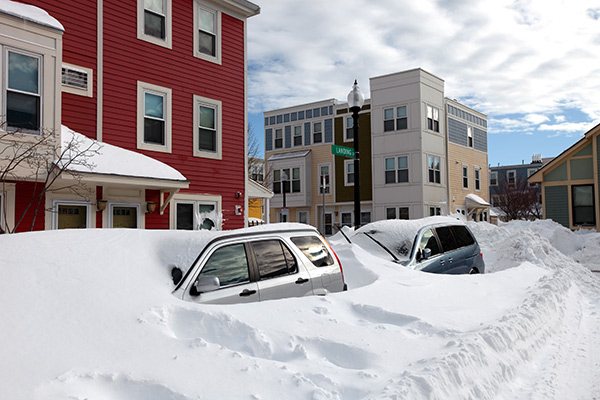
There is more moisture in a warmer atmosphere, which can lead to record snowfall.
It may seem counterintuitive, but the increase in snowfall during winter storms may be linked to climate change.
Remember — there is more moisture in the warmer atmosphere. So when the temperatures are below freezing, snowfall can break records.
And scientists are studying a possible connection between a warming Arctic and cold spells in the eastern United States. The idea is that a rapidly warming Arctic can weaken the jet stream, allowing frigid polar air to travel farther south.
Act when it matters most
Every day more than 60 people sign up for news and alerts, to find out when their support helps most. Will you join them? (Read our privacy statement.)